Open Letter: Urgent need for international regulation of livestock carriers
The Australian Alliance for Animals has joined 35 other animal welfare and protection organisations from around the world in signing a global open letter to the International Maritime Organization (IMO), calling for binding international regulations for livestock carriers.
The open letter, coordinated by Stop Live Exports, warns that the ageing global live export fleet poses escalating risks to human life, animal welfare, public health and the marine environment.
Dear Secretary-General,
Subject: Urgent need for international regulation of livestock carriers
We are a global network of animal welfare and protection organisations, writing to you with grave concern for the state of the international livestock carrier fleet. We urge the International Maritime Organization (IMO) to prioritise action to address the risks this sector poses to seafarer safety, public health, the marine environment and its inhabitants, and the welfare of the millions of animals transported by sea each year.
The actions and recommendations set out below outline selected key steps urgently needed to address these systemic issues and to establish a coherent international framework for the regulation of livestock vessels. While this letter highlights some of the most pressing concerns, it is important to note that numerous additional risks, both known and emerging, remain outside the scope of this correspondence.
These include, among others, biosecurity hazards and the spread of zoonotic diseases. In addition, this letter is sent with increased urgency, given the very recent tragic disaster involving the MV Spiridon II.
An ageing and increasingly unsafe fleet
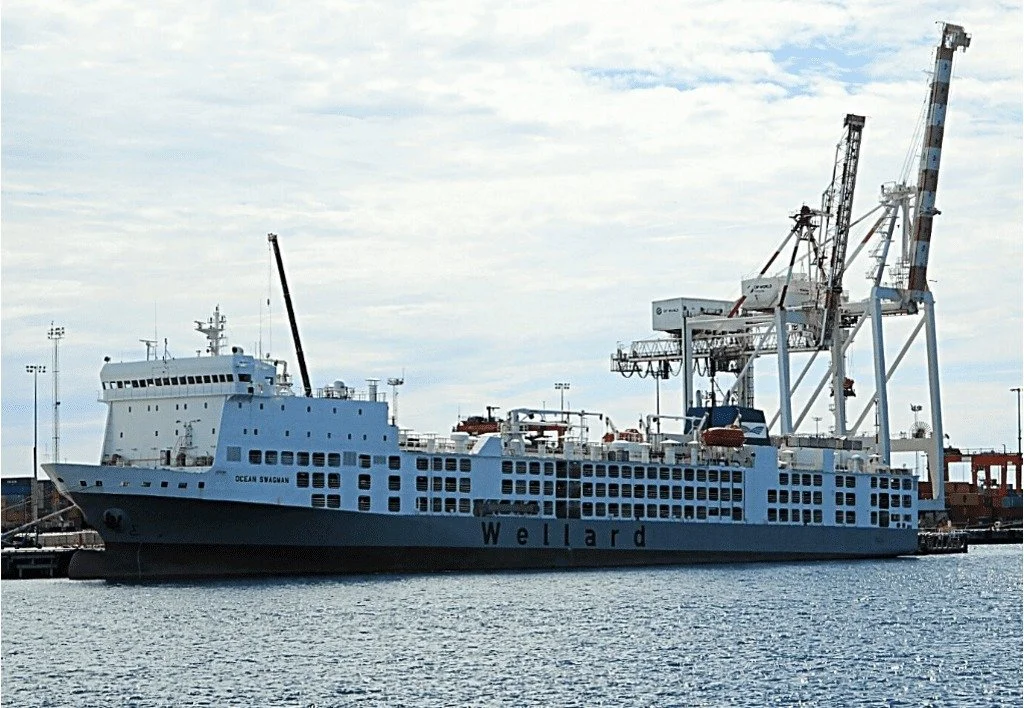
The global livestock export fleet is the oldest in any shipping sector. The average livestock carrier age is 40 years, which is far beyond the 25-year lifespan generally accepted as safe and commercially viable for vessels due to maintenance needs. Significantly, most livestock carriers are not purpose-built, and are conversions of ageing vessels, a practice that compromises stability, ventilation and structural integrity. The corrosive effects of constant exposure to animal effluent further accelerates deterioration and increases maintenance costs and risks. These factors have resulted in a shocking casualty record.
This century, at least seven livestock carriers have been lost, costing the lives of dozens of seafarers and tens of thousands of animals. Disasters such as the Gulf Livestock 1 (2020, 41 crew and nearly 6,000 cattle lost), Haidar (2015, 5,000 cattle drowned), Queen Hind (2019, 14,000 sheep drowned), Al Badri (2022, 15,000 sheep drowned) and Danny F.II (2009, 44 seafarers and 28,000 animals lost), amongst others, tragically expose systemic design and operational failings.
Growing awareness of the fraught nature and high risks of this trade are echoed by insurers, who repeatedly highlight unacceptable risks. Furthermore, the increasing prevalence of livestock carriers appearing on the International Transport Workers’ (ITF) abandoned seafarer list is deeply concerning. Significantly, since 2017, livestock vessels worldwide have remained the number one vessel category for the number of port detentions, as a result of serious deficiencies. Clearly, this is a much greater representation than the global fleet numbers would suggest as commensurate and offers further evidence that livestock ships are generally more unsafe and pose greater risk to seafarers. This is also a key finding in the Robin Des Bois and Animal Welfare Foundation Report on 64 EU-approved livestock carriers, which concludes that the average EU-approved livestock carrier is, more than ever, a substandard ship.
Weak oversight and black and grey flags
Many livestock carriers operate under black and grey-listed flags and under various Memoranda of Understanding (MoUs). Such vessels are regularly found to be in breaches of the International Convention for the Prevention of Pollution from Ships (MARPOL), safety equipment failures and seafarer working conditions. Of particular concern is the blatant disregard for MARPOL, with many vessels repeatedly transiting or operating entirely in ‘Special Areas’, especially the Mediterranean, Black and Red Seas, the Persian Gulf and the Gulf of Aden. These vessels wash untreated effluent and dispose of dead animals directly overboard whilst sailing, leading to environmental and public health risks, as well as understandably negative effects on tourism when dead animals wash up on beaches.
The IMO framework relies on flag states to enforce compliance and port states to inspect foreign vessels. In practice however, many livestock carriers are registered with states that lack the capacity or will to enforce standards. The commonplace reliance of a Flag of Convenience (FOC) with livestock carriers increases the challenge of regulating them for animal appropriate construction materials, and design and management standards. Furthermore, regional Port State Control regimes can only apply existing IMO conventions, none of which are designed specifically for livestock vessels. This leaves critical and inherently unique issues of design, waste management (including dead animals and untreated sewage being disposed of at sea), ventilation (in addition to other life support systems), and animal welfare standards largely unregulated.
Animal and seafarer welfare and wellbeing impacts
The absence of specific livestock regulation inherently results in profound animal suffering. Animals often endure extreme heat stress, overcrowding, illnesses and prolonged confinement in pens whilst soaked in their own effluent during long voyages, which often take weeks. The scientific consensus is clear: these journeys cause multiple and compounding stressors to animals, significantly impacting their welfare and often resulting in death or morbidity which, in turn, affects food safety and public health.
Seafarers are also at risk on livestock carriers due to the unique nature of the cargo. Crew must work on often unsafe, aged vessels in unclean environments with close interactions with large animals, such as cattle. These circumstances can cause injury directly, or indirectly, because of the requirement to manhandle dead and live animals and the inescapable exposure to pathogens, such as infectious zoonotic diseases. Routine and questionable live export management practices can also increase the risk of antimicrobial resistance (AMR) development from activities such as crew consuming animals that have been recently treated with antibiotics, to augment their often-basic diets at sea. Continual exposure to animal effluent on board also adds to already harsh working and living conditions.
Further, crew on these ships have been known to encounter risks such as animal decks collapsing (especially double tiered decks), thereby crushing the animals and crew below. These failures occur due to the nature of the design, the constant exposure to corrosive animal effluent, and the unique dynamic stressors of moving animals as cargo.
As mentioned, the ITF regularly reports a disproportionate number of livestock carriers on their abandoned seafarer list, which indicates that the trade is not reliably or financially viable, even if all mandatory safety and security standards are met. This is echoed in increasing reticence to finance or insure livestock carriers. Because of these serious issues, without an international Code for the Carriage of Livestock, the wellbeing of both animals and crew will remain highly compromised and at unacceptable and predictable risk by systematic neglect.
A global economic and social reality – yet alternatives are readily available
Millions of animals are unnecessarily transported live by sea each year to markets where robust imported refrigerated or chilled meat trades already exist. Indeed, chilled and frozen meat exports are growing worldwide and have overtaken the live trade in both profitability and reliability, as well as levels of public food safety.
Increasingly, some countries are recognising the inherent issues with the trade and are, as a result, introducing bans, phase outs and strong(er) regulations [although action is still needed on an international level]. For example, exporting countries such as New Zealand and India, have already legislated to end live animal exports by sea. Australia has committed to phasing out live sheep exports by 2028, and the UK has banned the export of live animals for slaughter or fattening, following the passage of the Animal Welfare (Livestock Exports) Act in May 2024. Additionally, other countries are pushing for similar actions, with community and government support.
Meanwhile, the global fleet continues to age, with around 110 registered livestock carriers currently trading, many of which are often idle or close to being scrapped. Without international intervention, many of these vessels will likely continue to operate at high risk of failure until the next inevitable disaster.
Our requests of the IMO
The IMO exists to safeguard shipping safety, and the continuing exemption of livestock carriers from specific regulation undermines that mandate. Therefore, we ask, with urgency, that the IMO develop an international Code for the Carriage of Livestock to protect seafarers, the environment and the welfare of live animals at sea.
Other cargo sectors, such as bulk chemicals, liquefied gases and radioactive materials, are governed by detailed IMO codes. However, the transport of millions of sentient, live animals, with their unique welfare needs and inherent shipping risks, is regulated only by general provisions never intended for this purpose. This regulatory gap reveals a glaring omission.
We therefore call on the IMO to:
Undertake a comprehensive review of livestock carrier casualties and deficiencies over the last 20 years, with findings publicly reported to drive reform.
Develop binding international regulations for livestock carriers, covering vessel design, stability, ventilation, waste management, crew safety and animal welfare.
Include mandatory contingency plans to end the risk of open-ended voyages for animals that are refused permission to unload in the specified importing countries. As part of this, guarantee the ability to unload and manage any livestock into quarantine stations at arrival at the importing country, to avoid any welfare issues which occur all too frequently, for example the MV Spiridon II in Türkiye during October/November 2025, and others before.
Publish detailed recommendations to member states as an interim measure, to ensure Port State Control regimes consider livestock carriers as priority ships for inspection, and can enforce minimum acceptable standards.
Adopt as a minimum baseline the higher national standards already applied by some states, such as Australia’s Marine Orders 43 (a tested and established order) to create a stronger, more easily regulated and safer global operating standard.
Undertake a comprehensive review of Port Reception Facilities availability for animal effluent, wastes and carcasses in ports where livestock vessels operate, and of Garbage Record Books entries on disposal of animal wastes and carcasses to investigate compliance with MARPOL convention, especially Annexes IV and V.
In conclusion
The stark reality is that no other global fleet combines such advanced vessel age, systemic safety failings, repeated catastrophic losses, and unique inherent human, environmental and animal welfare concerns. To continue as if this were acceptable is to tolerate preventable human and animal deaths, environmental pollution, public health risks and institutionalised cruelty of millions of animals annually.
We, as a global group of animal welfare and protection organisations, urge the IMO to place the regulation of livestock carriers on its agenda as a matter of extreme urgency, and convene a dedicated working group to draft specific regulations before another catastrophe ensues.
Failure to regulate this sector undermines the credibility of the IMO as the guardian of global maritime safety. It is not acceptable for the live animal export trade to remain a regulatory blind spot while countless animals suffer and tens of thousands of animals perish at sea each year, and vessels with repeated safety breaches continue to operate.
We are united in the belief that no other sector of shipping would be permitted to operate under such low and dangerous standards. We urge the IMO to urgently prioritise closing this gap.
We are available to answer any questions or provide further sources for any of the information contained in this letter.
We would also welcome a chance to meet and discuss the issues outlined, and look forward to your response.
Yours faithfully,
Stop Live Exports
Animals Australia
Australian Alliance for Animals
Compassion in World Farming International
Ethical Farming Ireland
Sinergia Animal Brazil
Stop Live Export South Africa
National Council of SPCAs
Sea Shepherd France
Robin Des Bois
Proyecto, Animal EC
GRAD Grupo de Resposta a Animais em Desastres
Gaia Libertas Direitos Animais e da Natureza
Proyecto ARPA - Mexico
FOUR PAWS
Animales Latino América
Tierschutzbund Zürich Switzerland
Sentient
Voiceless
Animal Welfare Foundation e.V, Germany
Fórum Nacional de Proteção e Defesa Animal
Victoria Animal
Eurogroup for Animals
Farm Animal Welfare Protection and International Humane World for Animals
Mercy For Animals Brazil
Animal Law Reform South Africa
Vets Against Live Export (VALE)
FFA - Israel Against Live Shipments
Anti-Transporte de Animais Vivos
Safe For Animals
Veterinarians for Animal Welfare Aotearoa
Movimento Näo Exporte Vidas
Latin America Animal Save Movement
Animals Angels
World Animal Protection
Winsome Constance Kindness
SPCA New Zealand