
Australians overwhelmingly want animals to be protected from cruelty and unnecessary suffering. They also expect governments to take animal welfare seriously and to create laws that protect animals from harm.
But are their expectations being met – or is Australia’s animal welfare system failing the very animals it is supposed to protect?
Through a partnership with Buddy Pet Insurance, the Australian Alliance for Animals commissioned leading behaviour change research institute, BehaviourWorks Australia, to conduct a nationally representative survey of Australian attitudes to animal welfare policy and governance. The findings reveal a significant gap between community expectations and the reality of Australia’s current animal welfare system.
Australians recognise animals as sentient
Most Australians recognise that animals are sentient, meaning they can experience positive and negative feelings such as pain, fear, pleasure, and joy.
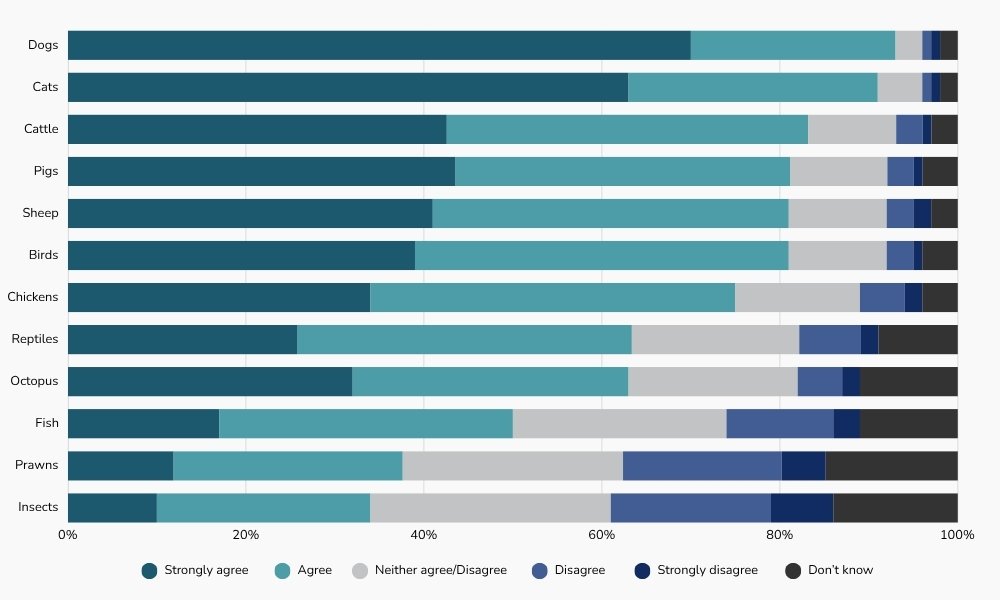
This recognition extends beyond companion animals. The research found that around eight in ten Australians consider common mammals, such as dogs, cats, pigs, sheep, and cows, as well as birds, to be sentient. More than half also recognise several other species as sentient, including fish, reptiles, and octopuses.
How much do you agree or disagree that the following animals are sentient?
Shaw, M. & Borg, K. (2026). Australian Animal Welfare Survey: 2026 Summary Report. BehaviourWorks Australia, Monash University.
This growing recognition of animal sentience is reshaping community expectations about how animals should be treated and what responsibilities governments should have toward protecting them. If an animal can experience their life as positive or negative, then their welfare matters morally and should matter legally. It also means governments and societies have a responsibility to minimise suffering and support positive states of welfare.
Australians expect governments to protect animals
Australians are not just expressing their personal concern for animals – they expect the government to treat animal welfare as a serious policy issue.
When asked about the government’s role in shaping animal welfare outcomes – from policy development, regulation, enforcement, funding, and updating standards – Australians consistently expected more decisive action from government. This means they believe animal welfare is a public responsibility, not simply a matter of individual morality or private charity.
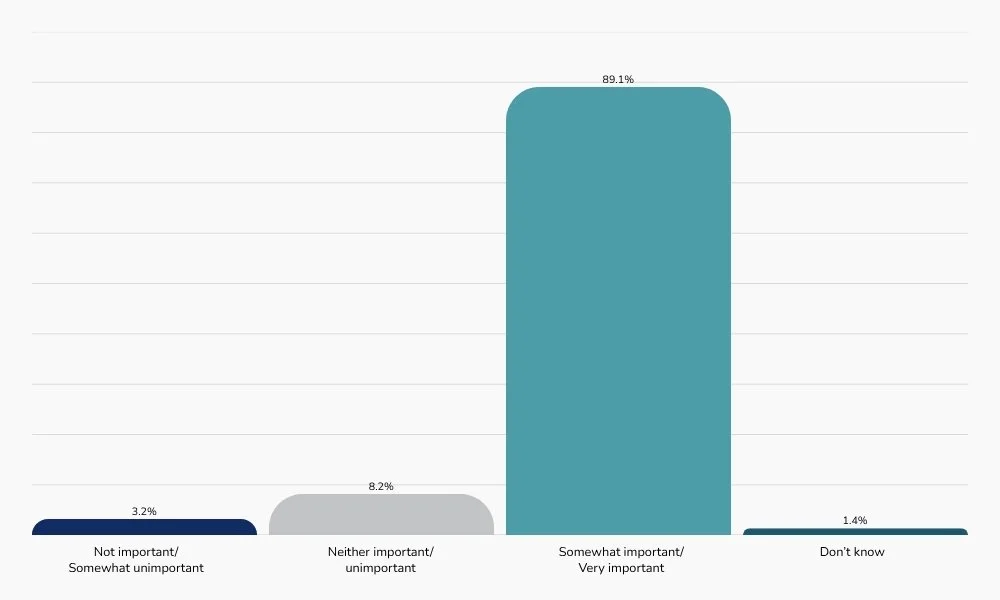
An overwhelming majority of Australians (89%) believe it is important for governments to create and enforce strong laws that protect animals from cruelty and neglect.
In your opinion, how important is it for governments to make (and then enforce) laws protecting animals from cruelty and neglect?
Shaw, M. & Borg, K. (2026). Australian Animal Welfare Survey: 2026 Summary Report. BehaviourWorks Australia, Monash University.
Importantly, Australians also do not believe concern for suffering should depend on species alone. Nearly three-quarters (73%) believe that reducing suffering should matter equally across species, rather than some animals being considered more important than others.
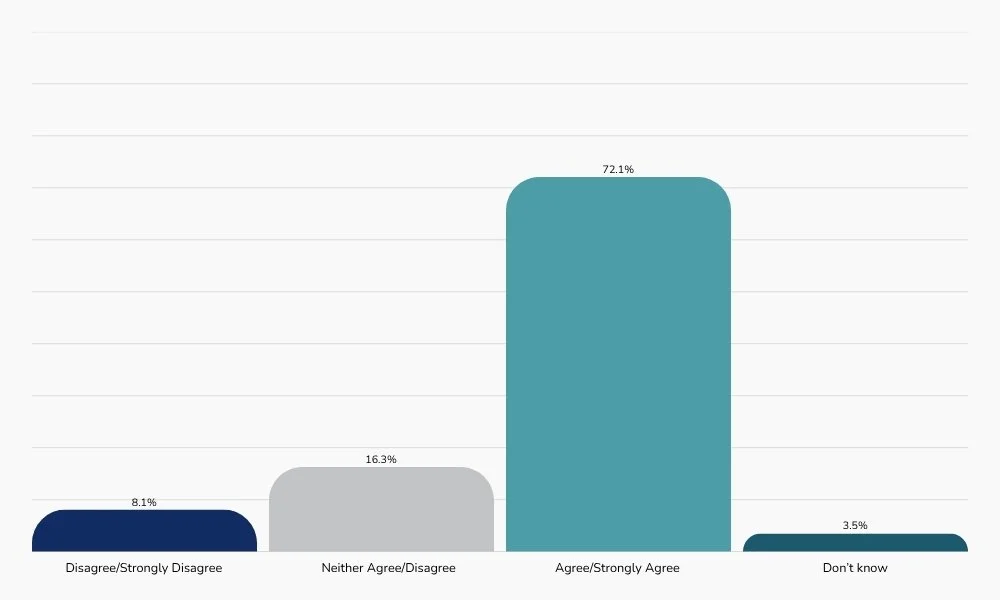
They also expect governments to actively minimise harm. Nearly three-quarters of Australians (72%) believe the law should require decision-makers, such as ministers and policymakers, to take reasonable steps to reduce the impact of their decisions on the welfare of animals.
The law should require decision-makers (like government ministers and policy-makers) to take reasonable steps to reduce the impact of their decisions on the welfare of sentient animals.
Shaw, M. & Borg, K. (2026). Australian Animal Welfare Survey: 2026 Summary Report. BehaviourWorks Australia, Monash University.
Is the current animal welfare system meeting public expectations?
Nearly eight in ten Australians (79%) agree that the government should reflect the concerns of the community about the welfare of animals. Yet the survey findings suggest Australia’s current animal welfare system is failing to meet these expectations.
Is animal sentience recognised in law?
Despite more than seven in ten Australians (71%) agreeing that animal sentience should be explicitly recognised in law, most state jurisdictions still do not formally recognise animal sentience in animal welfare legislation.
Animal welfare frameworks still largely operate within systems designed around production, profitability, and human use, rather than recognising animals as beings with their own welfare needs and capacity to suffer.
The sentience of animals should be explicitly recognised in animal welfare legislation.
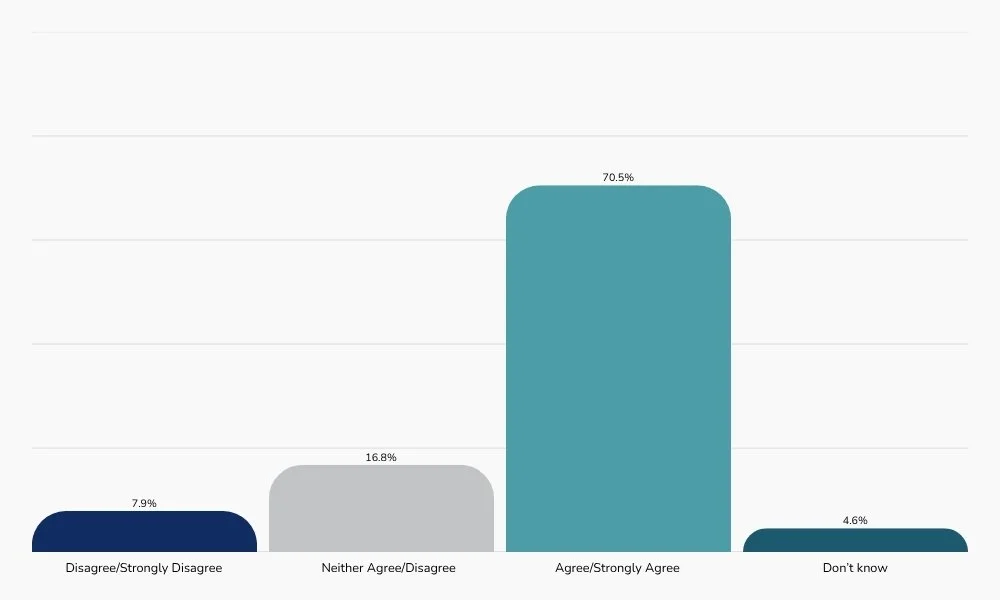
Shaw, M. & Borg, K. (2026). Australian Animal Welfare Survey: 2026 Summary Report. BehaviourWorks Australia, Monash University.
Are animal welfare responsibilities overseen by an independent and impartial body?
Currently, animal welfare decisions are overseen by departments and ministers responsible for agriculture, within systems where industry stakeholders hold significant influence over policy development processes.
This governance structure is out of step with public expectations. More than three-quarters of Australians (77%) agree that the final say on animal welfare policy decisions should be made by an independent and impartial authority.
A majority also said an independent authority focused specifically on animal welfare should have the final decision-making power, rather than departments and ministers responsible for agriculture policy.
The final say on government policy decisions that affect animal welfare should be made by an independent and impartial authority (e.g., an authority that has no financial or other conflicts of interest).
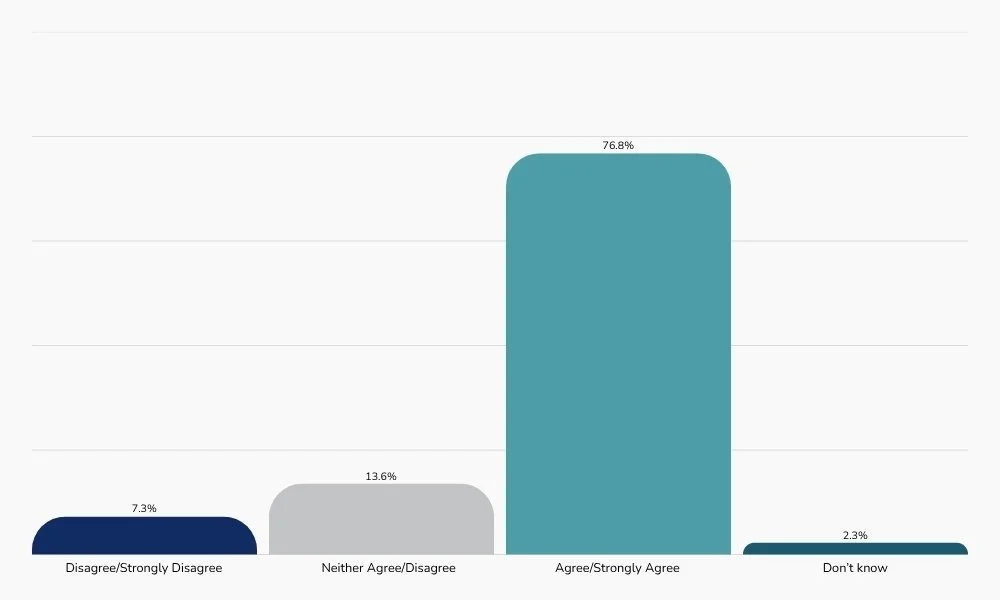
Is the impact on animals the most important factor in government policy decisions?
Nearly eight in ten Australians (78%) said the impact on animals should be the most important factor in animal welfare policy decisions – ahead of consumer, economic, or industry considerations.
What factors should be considered in government policy decisions that affect animal welfare?
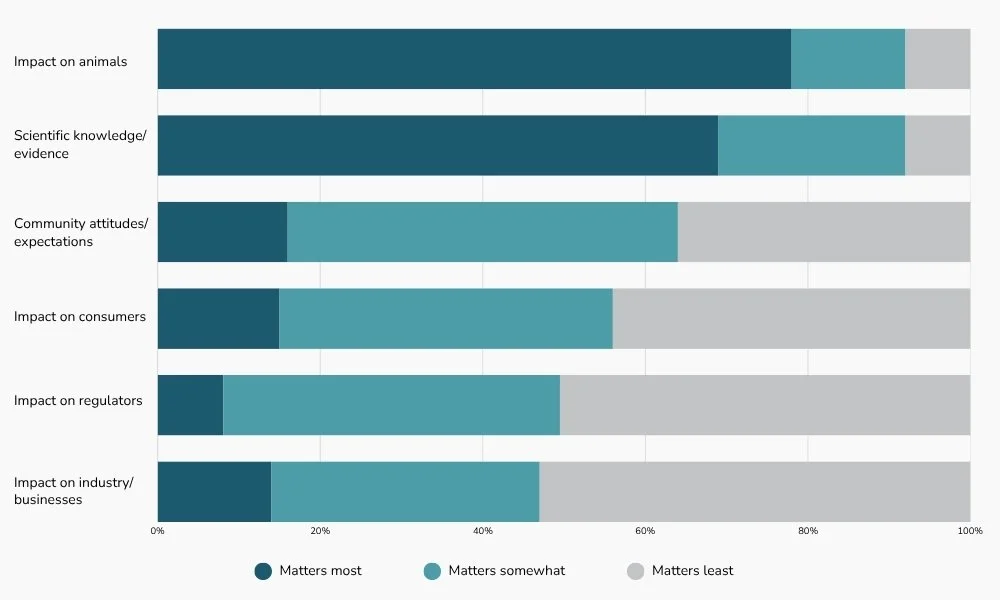
Shaw, M. & Borg, K. (2026). Australian Animal Welfare Survey: 2026 Summary Report. BehaviourWorks Australia, Monash University.
Yet, under the current governance system, the promotion of industry growth, productivity, trade, and other commercial priorities is given the greatest priority.
This creates an inherent conflict of interest within the system itself. Decisions that affect animal welfare are often made within frameworks where economic and production considerations are given far greater weight than the interests and wellbeing of animals, contrary to the expectations of the Australian public.
Animal welfare reform is supported across the political divide
One of the most important findings from the research is that support for animal welfare reform exists across the political spectrum.
Whichever party respondents identified as voting for, support for stronger protections, independent oversight, and government responsibility remained consistently high.
Participants were also asked to compare two hypothetical candidates from their preferred political party – one supporting stronger animal welfare policies and one supporting maintaining current policies.
The candidate supporting stronger animal welfare protections was consistently viewed more positively. Australians were more likely to see that candidate as more empathetic, relatable, and likeable, and a majority said they would be more likely to vote for them.
These findings challenge the idea that animal welfare is politically partisan. Instead, they suggest animal welfare is one of the relatively few issues capable of attracting broad community support across traditional political divides.
Imagine you are choosing between two candidates from the political party you usually support. Both candidates share your party’s core values, but they differ in their proposed policies on animal welfare. Please read the descriptions carefully and select the candidate you would be more likely to support.
Candidate A: Supports introducing stronger animal welfare policies.
Candidate B: Supports keeping current animal welfare policies the same so the government can focus on other areas.
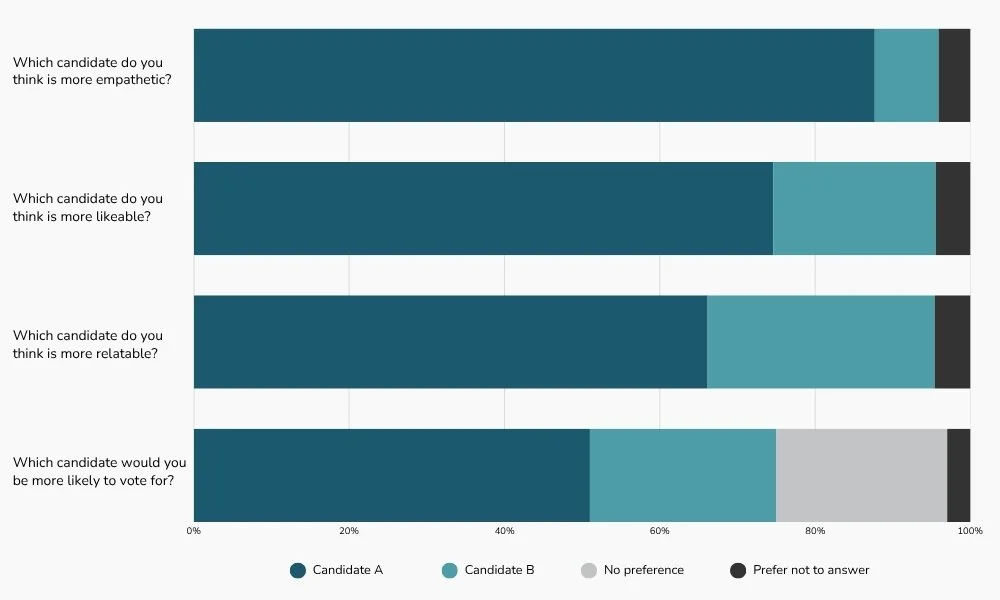
Shaw, M. & Borg, K. (2026). Australian Animal Welfare Survey: 2026 Summary Report. BehaviourWorks Australia, Monash University.
Australians are ready for reform.
Australians have made it clear that they expect animal welfare laws and policies to reflect modern science, community expectations, and the interests of animals themselves.
Right now, the gap between community expectations and the systems responsible for protecting animal welfare in Australia continues to grow. But together, we can change this.
Through the Fair Go for Animals reforms, the Alliance for Animals is working to build a modern animal welfare governance system that is more independent, science-based, inclusive of community views, and capable of genuinely representing the interests of animals.
Support the call for vital animal welfare reforms by joining thousands of other Australians in endorsing the Fair Go for Animals campaign today.